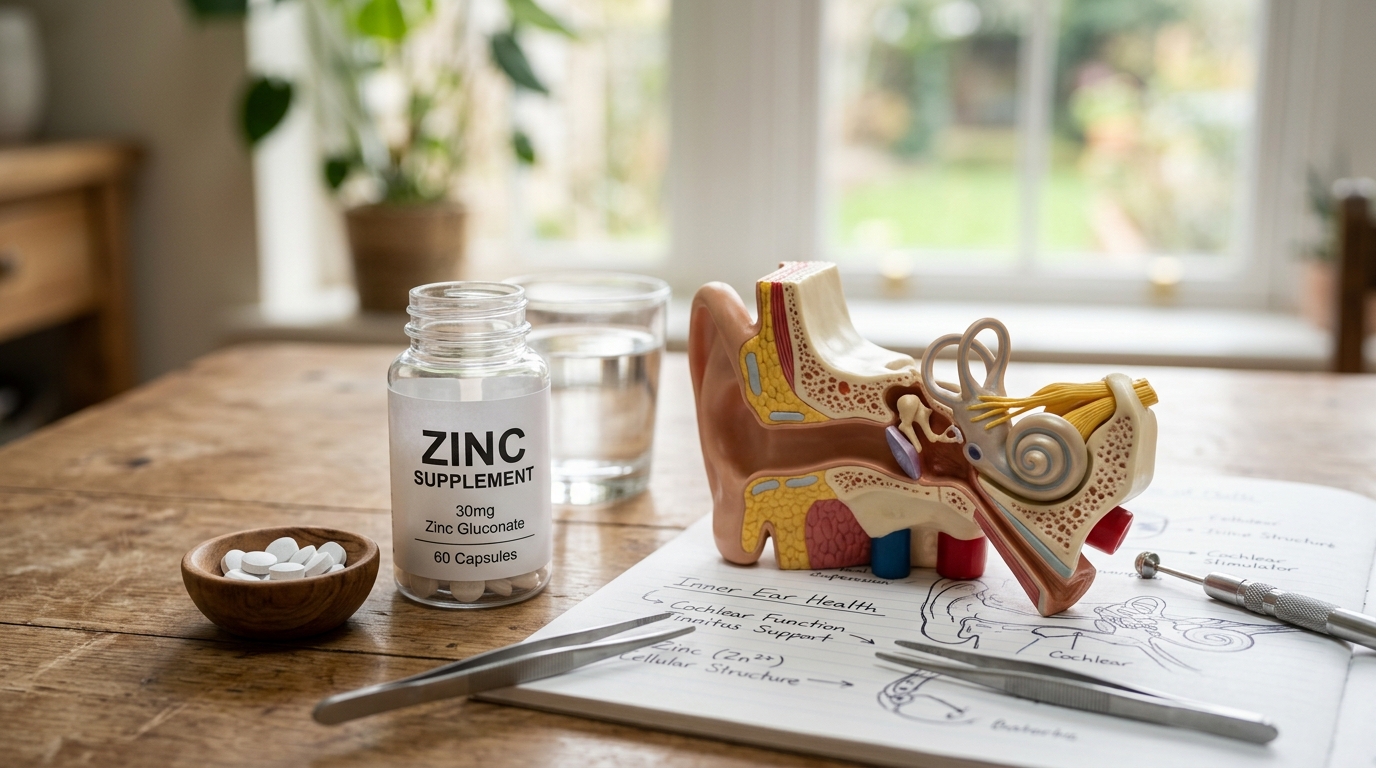
Zinc's Role in Hearing
Zinc is highly concentrated in the inner ear where it supports hair cell function and auditory nerve transmission. Deficiency compromises hearing and may contribute to tinnitus.
Zinc and Age-Related Hearing Loss
Age-related hearing loss (presbycusis) involves progressive inner ear deterioration. Zinc supplementation studies show it may slow this progression and improve auditory function in deficient individuals.
Zinc Deficiency Indicators
Signs suggesting insufficient zinc include:
- Frequent infections
- Slow wound healing
- Hair loss
- Skin problems
- Altered taste sensation
- Age over 65
Older adults often have inadequate zinc intake or absorption.
Dietary Sources
Food sources of zinc include:
- Oysters and shellfish (highest concentration)
- Beef and poultry
- Pumpkin seeds
- Chickpeas and legumes
- Nuts and seeds
- Eggs
- Whole grains
Supplementation Guidelines
For those with inadequate dietary intake, supplementation may be beneficial:
Dosing: 8-11 mg daily for adults (RDA). Therapeutic studies for tinnitus used 30-60 mg daily.
Forms: Zinc picolinate and zinc glycinate are well-absorbed. Zinc gluconate is economical but less absorbable.
Duration: Consistent supplementation for 2-3 months allows assessment of benefit. Some benefits appear within weeks.
Upper Limit: Exceeding 40 mg daily chronically can cause adverse effects and copper deficiency.
Complementary Nutrients
Zinc works synergistically with:
- Copper (necessary for zinc absorption)
- Magnesium
- Vitamin B12
Using comprehensive ear health protocols maximizes zinc's benefits.
For individuals with hearing loss or tinnitus, ensuring adequate zinc status may provide auditory benefits with minimal risk.