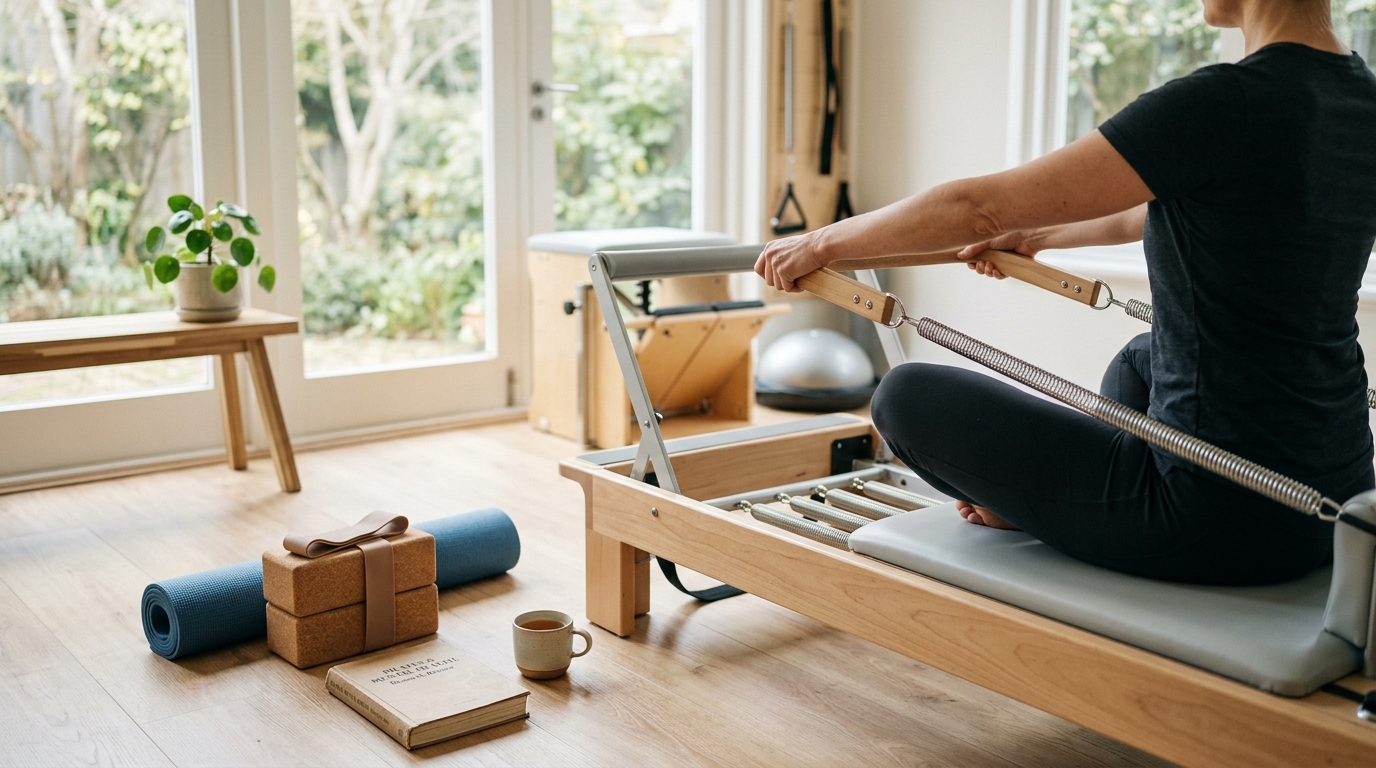
For years, Pilates has been celebrated for its physical benefits. But a growing body of research now confirms what practitioners have long felt: Pilates profoundly supports mental health.
The Mind-Body Connection
Pilates requires intense concentration on breath, alignment, and movement quality. This focused attention creates a meditative state that interrupts rumination and anxiety cycles. The controlled breathing activates the parasympathetic nervous system.
What the Research Shows
A 2025 systematic review analyzed 19 randomized controlled trials. Participants who practiced Pilates two to three times weekly for eight weeks showed significant reductions in anxiety scores and depressive symptoms.
Another study found that Pilates improved interoception, the ability to sense internal body signals. Better interoception correlates with improved emotional regulation.
Why It Works Differently Than Cardio
While aerobic exercise boosts mood through endorphins, Pilates works through different pathways. The emphasis on proprioception and slow movement builds a stronger connection between mind and body, particularly helpful for people who feel disconnected from their physical selves.
Getting Started
Begin with two sessions per week, either mat-based or using a reformer. Focus on classes that emphasize breath work and body awareness rather than intensity.