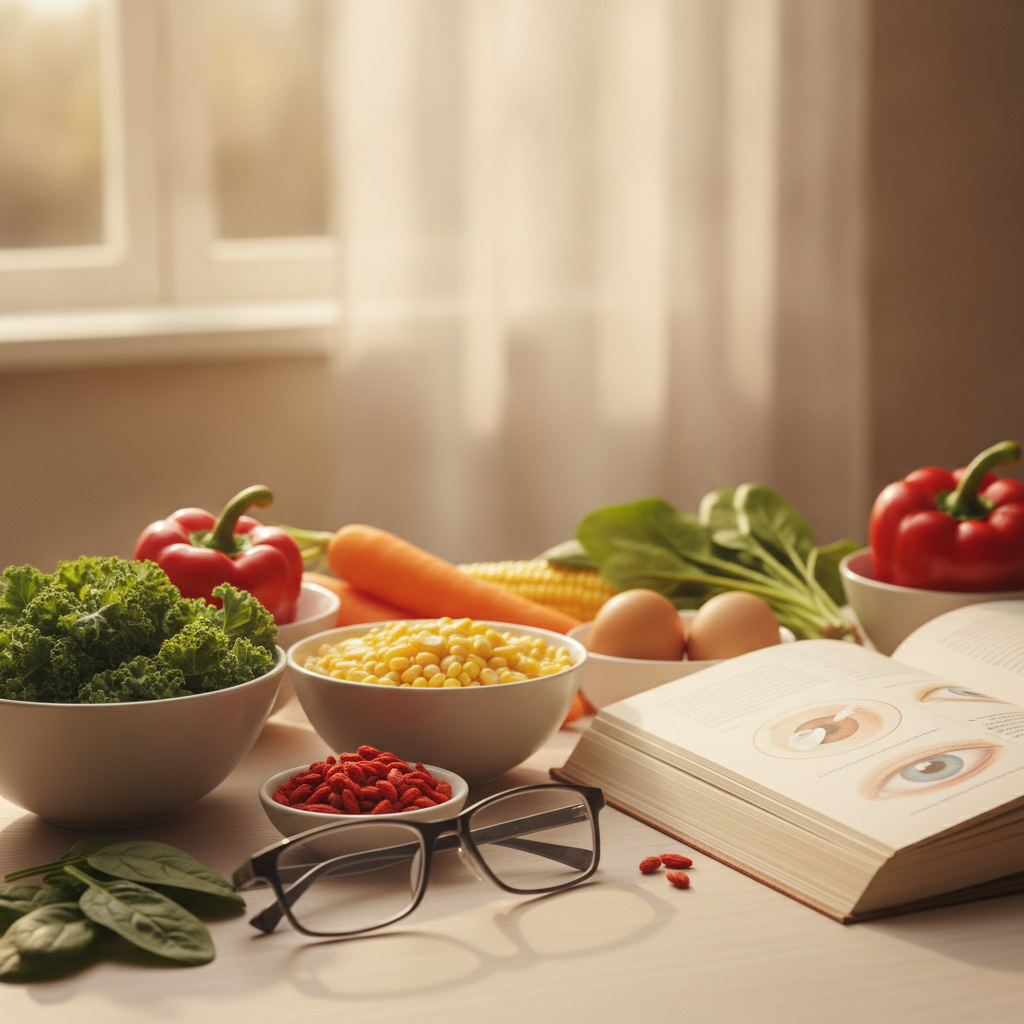
The Macular Pigment
Lutein and zeaxanthin are carotenoids highly concentrated in the macula (central retina) where they form the macular pigment. This protective layer absorbs harmful blue light and provides powerful antioxidant protection.
Protection Against Macular Degeneration
Age-related macular degeneration (AMD) is the leading cause of vision loss in older adults. Adequate lutein and zeaxanthin levels are associated with reduced AMD risk and slower progression when present.
Mechanisms of Protection
These compounds:
- Absorb blue light protecting photoreceptors
- Neutralize free radicals from light exposure
- Reduce inflammation in retinal tissue
- Support retinal pigment epithelium function
- Protect against oxidative stress
Rich Food Sources
Lutein-Rich Foods:
- Kale and spinach (very high)
- Collard greens
- Parsley
- Broccoli and Brussels sprouts
Zeaxanthin-Rich Foods:
- Corn
- Orange peppers
- Goji berries
- Paprika
Combining multiple sources throughout the day optimizes intake.
Bioavailability and Consumption
These carotenoids are fat-soluble, requiring dietary fat for absorption. Consuming them with olive oil or other fat sources dramatically increases bioavailability.
Supplementation Considerations
For those unable to consume adequate dietary amounts, supplements may be beneficial. The AREDS2 study found lutein and zeaxanthin supplementation beneficial for AMD prevention and progression slowing.
Typical Dosing: 6-10 mg lutein and 2 mg zeaxanthin daily for those at risk.
Timeline for Benefits
Regular consumption creates protective macular pigment over weeks to months. Consistent long-term intake maintains protection.
Prioritizing these carotenoids throughout life significantly reduces age-related vision loss and maintains visual function.